Subsolar

“The thing that hath been, it is that which shall be; and that which is done is that which shall be done: and there is no new thing under the sun.” (Ecclesiastes 1:9 )
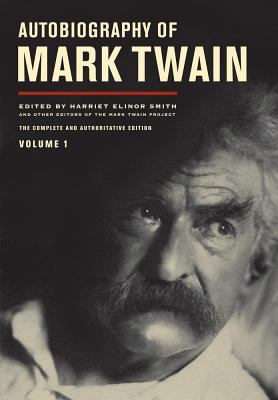
In an autobiographical fragment, Mark Twain recounted his time on the lecture circuit in the early 1870s. His stage appearances alternated with those of Horace Greeley, Josh Billings, Louis Agassiz, and others less notable. Some could be counted on to fill the house; others were “house emptiers.”

“There were two women,” Twain writes, “who should have been house emptiers—Olive Logan and Kate Field—but during a season or two they were not. They charged $100, and were recognized house-fillers for certainly two years.”

Twain felt he knew why Kate Field had her moment of fame, but Olive Logan … She strikes a peculiar chord here in the 21st century. “Olive Logan’s notoriety grew out of—only the initiated knew what,” says Twain.

Apparently it was a manufactured notoriety, not an earned one. She did write and publish little things in newspapers and obscure periodicals, but there was no talent in them, and nothing resembling it. In a century they would not have made her known. Her name was really built up out of newspaper paragraphs set afloat by her husband, who was a small-salaried minor journalist. During a year or two this kind of paragraphing was persistent; one could seldom pick up a newspaper without encountering it.

“It is said that Olive Logan has taken a cottage at Nahant, and will spend the summer there.”

“Olive Logan has set her face decidedly against the adoption of the short skirt for afternoon wear.”

“The report that Olive Logan will spend the coming winter in Paris is premature. She has not yet made up her mind.”

Twain provides two more examples that we will skip. The upshot is that Olive Logan’s name was almost universally known, but it was not known for what. Every now and then a person from the boonies would pose the simple question:

“Who is Olive Logan?”

The listeners were astonished to find that they couldn’t answer the question. It had never occurred to them to inquire into the matter.

“What has she done?”

The listeners were dumb again. They didn’t know. They hadn’t inquired.

“Well, then, how does she come to be celebrated?”

“Oh, it’s about something. I don’t know what. I never inquired, but I supposed everybody knew.” (The Autobiography of Mark Twain, Volume 1, University of California Press, 2010, pp. 151–2)

And so please do not ask me how any of the Kardashians came to be famous, or why they continue to be. Just know they did not invent the trick of being famous for being famous.

* * * * *

Now let us turn to Petroleum Vesuvius Nasby (né David Ross Locke).

Nasby was Twain’s companion at times on the lecture circuit, and Twain’s admiring account of his stage presence is well worth reading. The editors of the three-volume Twain autobiography do us the favor of telling us who this guy was:

David Ross Locke (1833–88) left school at an early age and was apprenticed to a printer, after which he worked on a succession of newspapers. At the outbreak of the Civil War he was the owner and editor of the Bucyrus (Ohio) Journal. It was not until a year later that he published his first satirical piece as Petroleum V. Nasby, an ignorant, bigoted, and boorish character who promoted liberal causes by seeming to oppose them.

Yes, the nineteenth-century Colbert Report.

Nasby (like Colbert) was a true celebrity. According to an obituary, cited by the editors:

These political satires […] were copied into newspapers everywhere, quoted in speeches, read around camp-fires of Union armies and exercised enormous influence in molding public opinion North in favor of vigorous prosecution of the war. Secretary [of the Treasury] Boutwell declared in a speech at Cooper Union, New York, at the close of the war that the success of the Union army was due to three causes—the army, the navy, and the Nasby letters. … These letters were a source of the greatest delight to President Lincoln, who always kept them in his table drawer for perusal at odd times. (Vol. 1, p. 506)

* * * * *

So, is there no new thing under the sun? Rather than try to prove the negative, we can surely agree that much of what passes for novelty is in fact a rediscovery. Forgetting and remembering, back and forth, over and over, such is human life.
Posted in Random | Tagged , | Leave a comment

Clausectomy

Josh Marshall, among many others, noted the tendentious editing perpetrated a month ago by the Don’s personal attorney general in ever so briefly summarizing the Mueller report, which was finally released today, sort of (lots of missing stuff).

What William Barr chose to quote: “[T]he investigation did not establish that members of the Trump Campaign conspired or coordinated with the Russian government in its election interference activities.”

Robert Mueller’s full sentence: “Although the investigation established that the Russian government perceived it would benefit from a Trump presidency and worked to secure that outcome, and that the Campaign expected it would benefit from information stolen and released through Russian efforts, the investigation did not establish that members of the Trump Campaign conspired or coordinated with the Russian government in its election interference activities.”
Leaving aside the fact that the campaign had numerous contacts with the Russian government, as documented in the Mueller report (in fact, as noted in sentence immediately preceding the one cited above!); and forgetting for the moment that “did not establish” does not mean “was not the case” (what were the Trumpists doing with the Russians, exchanging recipes?): anyone who pays attention to American public life will not be particularly surprised by this smarmy editorial decision. A certain sector of the political spectrum has a thing about introductory clauses in nuanced sentences: they hate them. No, that’s not right. They ignore them. In their view, not only do they have no force, these words simply do not exist.

I give you the poster child for grammatical butchery that is now all too broadly accepted (universally accepted in some quarters): “the right of the people to keep and bear Arms, shall not be infringed.” The vaunted Second Amendment. Or rather, part of it. The complete sentence is sophisticated, unsuited to our crude times, the first thirteen words of which can be skipped over ad libitum: “A well regulated Militia, being necessary to the security of a free State …” Who needs ’em? (The words or the militias.*)

The phrase “well regulated” is particularly germane, and most emphatically ignored by the gun nuts. Regulations that circumscribe the possession and use of armaments—imagine that!

N.B. A quick search determined that Frank Balsinger at Scholars & Rogues coined the word “clausectomy” in 2015. The clause in question comes at the end of Article VI, paragraph 3 of the Constitution, but the idea is the same: if you don’t like it, ignore it.

__________
*The “militias” in the Second Amendment have evolved into the “National Guard”—“a reserve military force,” says Wikipedia, “composed of National Guard military members or units of each state and the territories of Guam, the Virgin Islands, Puerto Rico, and the District of Columbia, for a total of 54 separate organizations. All members of the National Guard of the United States are also members of the militia of the United States as defined by 10 U.S.C. § 246. National Guard units are under the dual control of the state and the federal government.” On the other hand, the “militias” of popular imagination are the whack-jobs holed up in the forests and forlorn regions of the continental U.S. See, for instance, this. The lede: “Before the F.B.I. arrested Larry Hopkins, the leader of the right-wing militia that detained migrant families in the New Mexico desert, he’d had so many run-ins with the law that his police record stretched across much of the United States.” God bless America.

Posted in Agora | Tagged , , | 1 Comment

Deliverance

Where, if we could, would we send him,
this heartless ignorant shell of a man?

Someplace without clean running water,
neither hot nor cold, no water at all,
let him clean himself in the dust by the road
like a sparrow, but without feathers or beak.

Someplace where the sound of children crying
never stops, never settles into a groove,
continues randomly changing in volume and pitch,
mispronouncing his name, w for r.

Someplace far from the nearest golden commode,
out in the open air without a golf cart or limo,
his mincing feet pinched in his Gucci shoes,
silk shorts filling with liquid and solid filth.

Maybe no place at all, floating off like a bad smell,
wandering the earth like a recurring nightmare,
startling himself awake in a cold sweat,
falling back to sleep not remembering his name.

Maybe an even better no-place-at-all,
a point in Euclidean space,
dimensionless,
.

That is where I, at least, would send him,
if I thought that would solve the problem.

Posted in Agora | Tagged , | Leave a comment

Leftness

Have I ever mounted a bicycle from the right?

No, and I do not recall seeing anyone else do it. “Why do you ask?” I ask myself.

Blame it on The Third Policemen—specifically, the fecund imagination (or is it boundless wisdom?) of Sergeant Pluck. Let us pick up the thread as he discusses certain peculiarities of Policeman Fox, who has yet to appear in the story, and the fundamental problem of right versus left:

‘I think he has an opinion that there is a turn to the right down the road and likely that is what he is after, he thinks the best way to find it is to die and get all the leftness out of his blood. I do not believe there is a right-hand road and if there is it would surely take a dozen active men to look after the readings alone, night and morning. As you are perfectly aware the right is much more tricky than the left, you would be surprised at all the right pitfalls there are. We are only at the beginning of our knowledge of the right, there is nothing more deceptive to the unwary.’

Naturally, our narrator is as baffled as we are, but it all becomes clear, if mud is such:

‘I did not know that.’
The Sergeant opened his eyes wide in surprise.
‘Did you ever in your life,’ he asked, ‘mount a bicycle from the right?’
‘I did not.’
‘And why?’
‘I do not know. I never thought about it.’
He laughed at me indulgently.
‘It is nearly an insoluble pancake,’ he smiled, ‘a conundrum of inscrutable potentialities, a snorter.’ (The Third Policeman, Ch. 10)

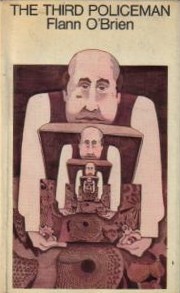
The Third Policeman cover

It is hard not to think of this pancake every morning and every evening as I mount my bicycle. Is this a universal truth, an eternal verity that has been hiding in plain sight my whole life?

Because our species is designed to seek patterns and/or meaning in what we encounter, the thought floated upward: maybe this predilection predates the machine age. Did I ever see a person mount a horse from the right? No, not in any movie or television show, as far as I can recall. My experience with real-life horse mounting is scant—I did mount and ride a pony at Uncle Jack’s farm in Chardon, Ohio, when I was a kid, and my siblings did as well, all from the left, I would bet but cannot, of course, be 100% sure. One of my brothers is left-handed, yet he almost certainly mounted from the left as the rest of us did.

What does this mean, if true? What does it mean in any case? I do not know, even after thinking about it.

Posted in Random | Tagged , , | Leave a comment

Track-me-not

Slate has started plastering an alert over their home page on my first visit of the day:

Slate ad blocker BS

The fact is, I do not block ads. I see a lot of ads online, all day, every day (I see them, e.g., at Slate). I do use a tool called Privacy Badger to disrupt a site’s (and/or their advertisers’) use of tracking scripts. There is a difference, Slate people.

Just as I do not like people following me on the street, I do not appreciate people following me around online.

Show me your ads, if you must. But you will have to use old-fashioned guesswork or other non-intrusive tools to target them at me.

Addendum 2018.01.15: Slate just launched a redesigned site, and the hectoring has stopped (at least for now).

Posted in Agora | Tagged , | Leave a comment

Eclipsed

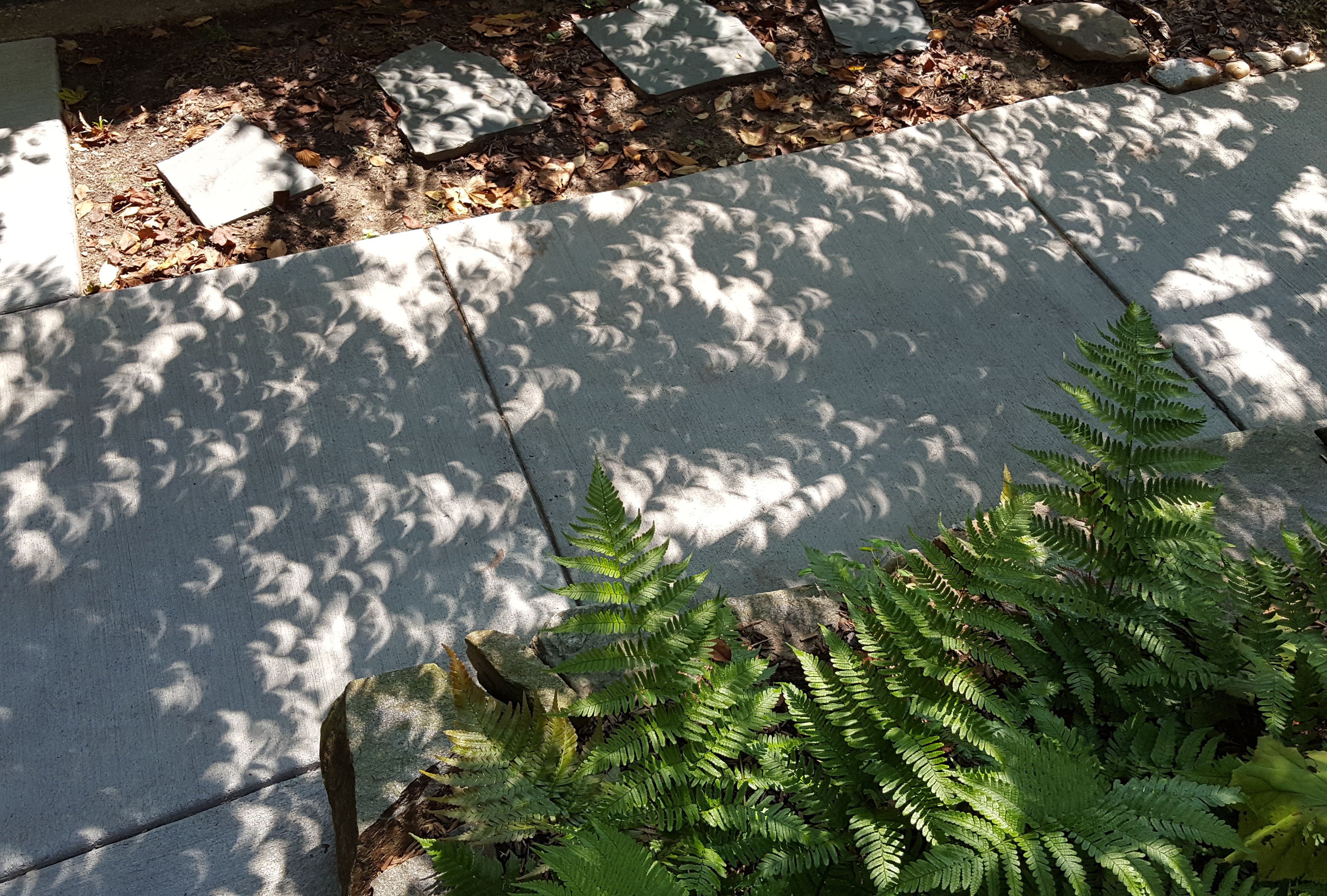
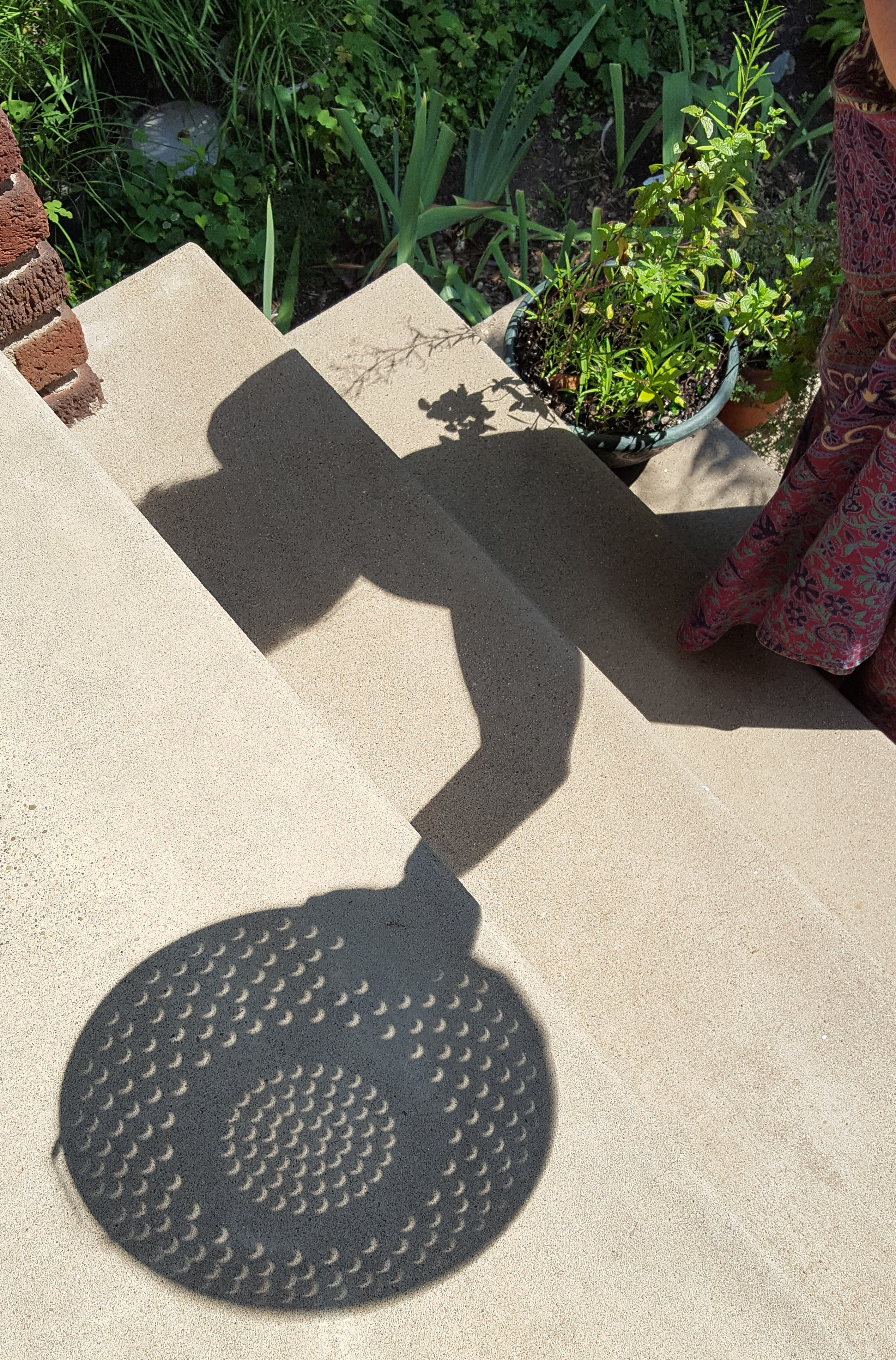
In Washington, DC, the solar eclipse of 2017 was not total, but it was awesome nonetheless. Equipped with safety glasses, we saw the moon obstruct about 90% of the sun, the mostly sunny day became noticeably dimmer as the eclipse progressed.

A particularly striking phenomenon was seeing images of the partially obscured sun randomly scattered on the ground. You can find many fine examples of this on the internet, but these are photos I took so they have that little extra bit of nostalgic oomph.

20170821 solar eclipse-images on sidewalk

As you may know, the gaps between the leaves of trees, or the holes in a colander, act as pinhole cameras that project images of the sun onto the ground. The explanation sounds boring, but the effect is weird. For me it is the most uncanny thing about a solar eclipse. Maybe if I experienced totality that would change, but the sight of these crescents all over the ground was truly unnerving. (For a reminder of how the sun normally projects through the leaves, click here.)

20170821 solar eclipse-images projected by a collander

I am looking forward to the eclipse in 2024, with totality in Cleveland, my home town.

Posted in Random | Tagged , , , | Leave a comment

Phew!

“There are less people here today than yesterday.”

It’s fewer, people! Fewer people!*

It’s an easy rule. I think you can handle it, my friends. If you’re talking about a bunch of things (multiple objects), you use fewer, fewest. Example: “I’ll order fewer pancakes next time.” If you say “less pancakes,” sorry, but I may think less of you.

If you’re talking about a single thing that is measurable, you use less, least. Example: “There was less pancake batter than I expected.”

So, you don’t say, “The Cubs scored less runs today.” You don’t say, “Zoe has less pennies in her piggy bank,” even though she has less money because of it.

Don’t be confused by the fact that you use more in both cases for the opposite situation: more batter, more pennies. You lucked out: one word fits all. Be happy about that. But don’t start using a single word in our original situation, when you really should be making a choice between the right one and the wrong one. Maybe if we are not lazy in our word choice, there is a better chance we will not be sloppy in our thinking.

To sum up: if something is countable and you remove some items, you have fewer. If something is measurable and you take away some of it, you have less.

Now go forth and use the damn words properly. It will make Stannis Baratheon happy (or, should we say, less miserable).

__________

*Notice the comma in the first sentence? And the lack of comma in the second? See the difference in what I’m saying? No? Well, that’s another thing that is almost universally absent nowadays: the comma of direct address. I challenge you to find three people who know what that is. You see its absence all the time: “Hi Mom!” Goodbye, sweet comma-modulated clarity, by whose grace we know the difference between “Let’s eat, Mom” and “Let’s eat Mom.”

Addendum 2018.05.14: Oh-boy-oh-boy, it’s a running joke! (Yes, yes, I’m still catching up …)

Addendum 2018.05.23: The torch has been passed!

Posted in Random | Tagged , , | 3 Comments

Assessment

I gave him four months to do something right in his catastrophically miscast role as president of the United States.

It is now clear that Trump is the most ignorant, stupid, selfish, self-centered, self-absorbed, needy, cruel, unhealthy, churlish, uncouth, petty, insular, vindictive, vain, greedy, creepy, tasteless, shallow, incurious, inarticulate, illiterate, sleep-deprived, overcoifed, smarmy, lugubrious, amoral, miserable, insecure, self-important, untethered, unstrung, unhinged, incompetent, unreliable, thin-skinned, thick-headed, underachieving, overbearing, mendacious, lying, self-deceiving person I have ever seen in public life.

There is undoubtedly more to him than that, but he is such an attention-grabbing, time-sucking, life-curdling jerk that one needs to stop and look away at regular intervals. And yet he remains, never far from consciousness, a decaying tooth, a dull ache in the knee, a bad meal waiting to exit violently in one direction or the other.

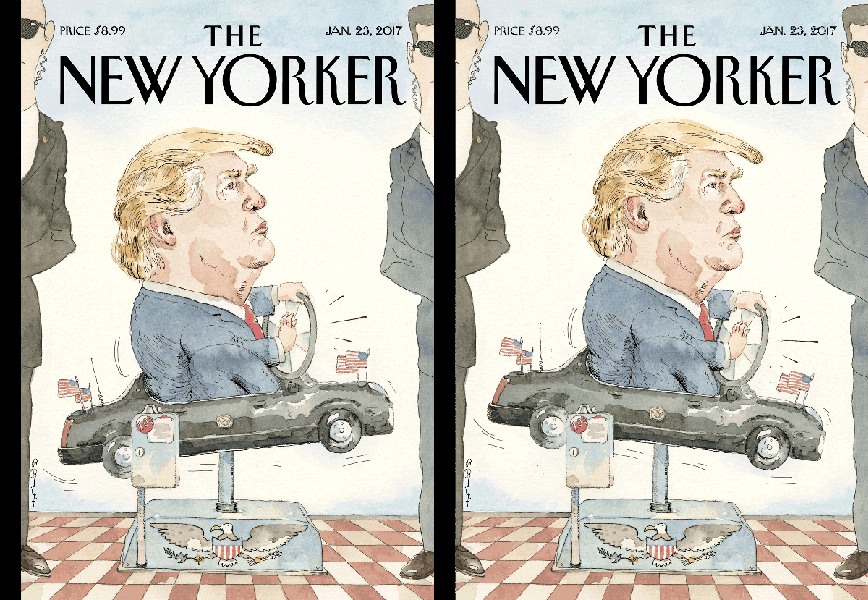
New Yorker cover: Trump in the kiddy car

But it is a mistake to think Trump himself is the problem. What can one say of the people who voted for him, and those who continue to support him? There are too many to know, let alone describe. One should resist characterizing people one has never seen in action.

Trump is a problem, but not the problem. Trumpism is the problem. Trumpism not only gave us Trump, it gave us Mitch McConnell, Paul Ryan, and the rest. Trumpism had infected the country long before the Trump called Donald entered the presidential race. (Did Trump invent birtherism? Far from it.)

So, what is the cure? We used to think cancer was one disease, whereas it is many. Pancreatic cancer, for instance, behaves differently from breast cancer, of which there are several varieties to boot; and treatments vary accordingly. The same is true of Trumpism. There is corporate Trumpism, media Trumpism (a form of corporate Trumpism, but disguised as populist Trumpism), bigoted Trumpism, and (strangest of all) religious Trumpism. Oh, and there is screw-you Trumpism, the adolescent nihilism of the confused and angry.

As with cancer, it seems the cure for Trumpism will be multifaceted and will take decades.

Posted in Agora | Tagged , , | 1 Comment

Eulenspiegel’d

Our poor little language gets pranked again.

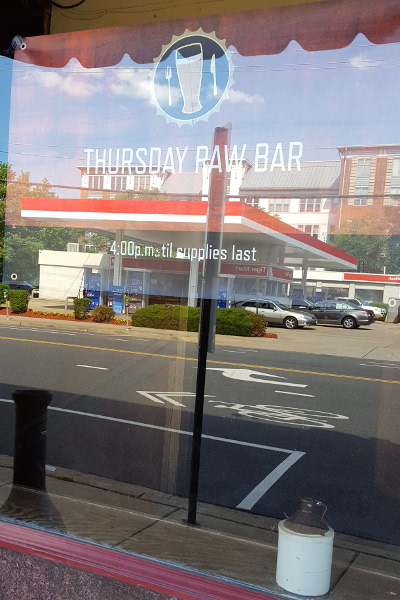
Till Supplies Last

Click to enlarge

It’s Thursday, and if you happen to be in Arlington, Virginia, and if you like oysters, you can eat raw ones at a certain restaurant, from 4:00 p.m. “til supplies last.” (I’ll wait while you squint at the photo to see for yourself. Or until you do.)

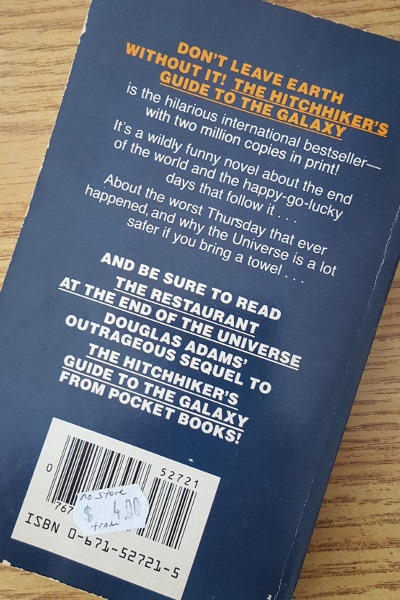
Now, seeing an English-challenged sign did not make this the “worst Thursday that ever happened.” That distinction, if I can believe the promotional copy on the back cover, belongs to a particular day in The Hitchhiker’s Guide to the Galaxy, a copy of which I happened upon today in the kitchen at work, free for the taking—so, of course, I took it, since I (“For shame!”) have never read it.

Posted in Random | Tagged , , | Leave a comment

Bottled

The Cleveland classical radio station WCLV made me do it, twenty years ago.

In the month preceding Valentine’s Day in 1997, they kept reading a love poem by a British poet laureate and asking: “Can you write something that good?” Now, I don’t believe in competition in the arts, but they were offering some nice prizes, so I thought, what the heck—I’ll give it a try. It seemed like a nice excuse to pick up the quill again.

Well, to make a long story short, if you tuned in to WCLV at about 6:30 p.m. on February 14, 1997, you would have heard my name announced as the first-prize winner in the newfangled “internet” category (for those who tune in to the station via the worldwide web). Then you would have heard about 15 seconds of silence. Technical difficulty. But after another bit of Saint-Saëns’s Carnival of the Animals, you would have been treated to the burnished tones of Robert Conrad reading my little pome:

The other winning poems were recited by an actor who happened to be in Cleveland around this time (I seem to recall it was David Birney, who had ties to the city). For some reason, the winning entries submitted via the internet were not ready for the actor to record, so they were read by the radio voice of the Cleveland Orchestra, which suited me just fine.

Posted in Random | Tagged , , | Leave a comment