
In English we say Germany, not Deutschland. We say Italy, not Italia. We say Croatia, not Hrvatska. We say China, not Zhōngguó. And so on.
So why are so many news outlets and other organizations now saying Türkiye? (Or at least printing it—who knows how they say it.) What makes Turkey so special?
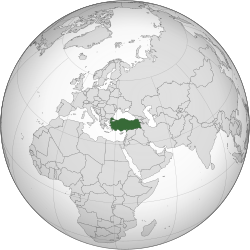
This change has not yet become universal. Given that it is perfectly reasonable to keep calling that country Turkey, and that no ordinary English-speaking person is going to add a diacritical mark and superfluous letter to an orthographically reasonable spelling, what language gods have determined that Turkey is now Türkiye and, like it or not, Türkiye will strike our eyes whenever Turkey is in the news?
I have a theory, and it’s my theory, which is to say it is a theory I have come up with.* Turks have rankled for years, maybe centuries, over the fact that, in English, their country is named after a large, not very nimble, rather homely bird. Okay, not “named after”—vice versa.
Holy cow! It doesn’t take long nowadays for one’s theory, by which I mean my theory, to be validated:
In 2021, President Recep Tayyip Erdoğan issued a circular emphasizing the use of Türkiye in international contexts to represent the country’s culture and identity better and to avoid the pejorative associations of the English word “turkey” (the bird). The United Nations formally recognized this change in 2022, and Türkiye is now widely used in diplomatic contexts.
A simple case of national rebranding. Begone, infernal turkey cock. Guineafowl you may remain, if you please. But if you insist on calling yourself a turkey, Türkiye will have nothing to do with you.
Wikipedia is holding out for Turkey. You can, too, dear anglophone reader.
____________
*h/t (or apologies) to John Cleese.

Alternatively, we can all start referring to our Thanksgiving feast as a türkiye dinner.